Keeping Cask Beers

A few of us brewers have discussed doing this before (but with Videos), here is my take on keeping cask beer using cask-widge extractors with casks in the vertical position, our coldstore is set to 11c.

I have written this as a conversation piece, feel free to improve or correct my procedure, point out anything that you consider to be blatantly stupid etc. Feedback to – info@wishbonebrewery.co.uk

  • Put cask in position in coldstore/cellar and leave for at least 24 hours, it could have just been delivered and be pretty shaken up due to transport and its probably warmer than you want it.
  • Ensure all Taps, Pegs, extractors etc that will touch the beer are clean and sanitised, this includes cleaning and spraying sanitiser on the Shive and keystone.
  • *At this point if your were traditionally stillaging your Cask beer on its side you would use a Hard peg to Vent the cask followed by hitting the Tap in, if the beer is lively it may be best to just leave it in the vented state and put the tap in later once the beer has had time to settle down*
  • Using a soft faced mallet so as not to damage your Taps or Extractors you hammer the cask-widge into the keystone. We use a short length of pipe and a plastic tray to catch any beer as you open the vent tap on the Cask-widge. Its at this point where you find out if the beer is lively or not and a decision is made on how long to leave the vent open for the cask to breath. Some beers will just give a little light hiss and its fairly fair to say they will be in a serve-able state within 24 hours, other beers will spew out many pints of foam and its obvious that they must be vented for longer to allow a sensible serve through the hand pump. If we feel the need we can also take a taste sample at this point
  • *At this point with a traditional stillaging you would be checking for the taste, aroma and clarity from the cask tap, should clarity be appropriate to the beer in question*
  • In our setup we only check for clarity when pulling the beers through to the Handpumps on the bar, fined beers should be clear, Unfined beers can be clear / hazy / cloudy, taste is key and serving an appropriately looking beer that your customers find acceptable for style.
  • Soft Pegs are used while serving to let air but no debris into the casks, these can be replaced with Hard Pegs for traditionally stillaged or closing the vent valve on our Cask-widge when serving has finished. Putting the hard peg in or closing the valve helps the beer retain its condition for the next session of serving.

We find that a half full cask if left for a week is not quite right to be served over the bar as the air has oxidized the beer and it doesn’t taste as fresh as it should. However, not all beers are the same, some darker and stronger beers will be more resilient to oxidation and sometimes a 3/4 full cask will be perfectly good after that same week, beers should be diligently tasted before being put on the bar each session and if a beer is not right it should not be served.
I have thought about getting some Cask Breathers for our brewery bar so we could keep beers from the first Friday of the month to the second Saturday, we decided against this because we prefer to have a changing range each time we open the brewery bar but thats not to say that the beer couldn’t be kept in good condition because of that little added co2 blanket from the cask breathers. If we ever start a proper pub I think we would go the Cask-breather route to keep our beers in the best possible condition.
We note that a well settled cask can be tapped and served within 5 minutes, it is not ideal as the beer could be more lively, we have 2 sizes of Sparklers to deal with this and the sparkler can be removed altogether for particularly lively pours.
Its quite possible to have vented a non-lively cask for 2 days prior to serving and it will still be a lively pour through the handpull.

Thanks


Drover ABV change

Don’t worry, we didn’t change the sheep, its the same sheep you know and love… in your own ways.

We are changing the ABV of Drover, it will be 3.9% rather than 4.2% from now on so that is differentiates it from Gumption Bitter at 4.5% a bit better, we didn’t want to loose the character of the original so we have increased the amount of Vienna Malt we use in it to compensate and then just balanced the hop bitterness to the new ABV. You’ll notice that we are referring to ABV as ALC too so as to edge closer to the Trading Standards preferred way of expressing alcohol percentage, it means exactly the same thing 😉

Latest GF Batch test results

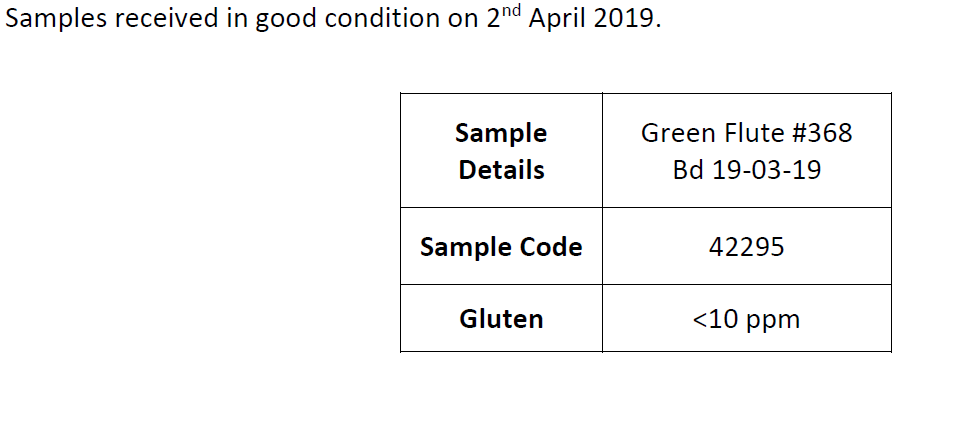
Our latest batch of Greenflute Gluten Free Pale hopped with Citra Mosaic & Simcoe has come back with flying colours again after the Lab Test, <10ppm is below the measurable limit and you have to be below 20ppm to pass the test.

Available in Cask & Keykeg while stocks last 🙂

Buyouts & Supermarkets

Photo courtesy of https://twitter.com/Copeasaurus

There are just too many questions around Buyouts and Supermarkets, multiple questions and multiple answers / opinions, which questions are right to ask? and what are the answers? I’ve tried to have a balanced view of both sides here…

Lets think Positive:

Multinational brewer buys high profile indie brewer, leaves brewer alone to do what they do, that brewer now gets into all manner of tied lines in pubs and supermarket shelves. The price of their beer comes down and makes more people able to drink it. Consumer Win! Brewery fortifies the job security of their employees.
Supermarkets now have such a good range of beer that any regular shopper can try beers that were previously only available in bars and specialist bottle shops. Win for Consumer!
Small indie producers now fill the market gap that the recently bought out brewery used to fill and all the small and local businesses flourish. You can get your ‘main stay’ beers from the supermarket shelves then you go down to your local Pub or Bottle shop to get the more varied and interesting beers. Overall the introduction of more choice in supermarkets is good for the industry and make a whole range of new consumers aware of beers amazingly varied and different attributes, this brings in a new group of consumers. Industry Win.

Lets think Negative:

Multinational brewer buys high profile indie brewer and makes their beer available in may more places, supermarkets have such a great range of beer on their shelves that anyone can buy beer at supermarket prices while ordering their shopping online. Consumer Win! Now the consumers don’t have to leave the house, they no longer bother with the specialist bottle shop they used to spend their hard earned coin in, the no longer go to that little Micropub where they used to try all the different beers and made so many new friends in the process.
The brewer now makes less per Can than they ever have, the overall price point at wholesale of beer drops and creates a market where small operators find it increasingly difficult to enter the market and sustain a business unless you can afford to drop your prices to supermarket levels. You only have to watch Dragons Den on TV to see the Dragons eyes light up with ££-signs when they find out they already have a Supermarket deal… unbridled capitalism right there! Kerrching!
Small indie businesses die out leaving only the large scale production breweries. Consumer choice slowly dwindles to that which big business sees fit to give us.

Now what about the Multinational business that bought the high profile indie:

Where does the profit go, Does it move out of the country and into the pockets of shareholders?
What are the credentials of the big business behind the new owner, we hear of less good stuff about their support of various regimes in certain countries.

Where does your beer come from:

As a consumers we are all becoming more savvy and asking where the products we buy come from, who makes it, who owns the business, is it ethical, is it vegan, is it local, etc, etc…
We want to know the names of the people that make the stuff we put in our mouths, we want it to be local and the local support we give to these indie businesses to have the knock-on effect of feeding back into the local environment and community.

What does it all mean? I’ll be stuffed if I know, maybe you can tell me….

We are obviously going to see a lot more buyouts over the coming years, I’ll be honest, on a personal level it makes me sad. I won’t avoid the beer from bought out brewers but I will favour the independent producers.

Whats for sure is consumers want Maximum flavour for Minimum effort, consumers will take the shortest route from A to B.

Here’s a few new bits

Yeah I know, we have made Pumpclips we can write on before but this time there is one with a tick box for Fined or Unfined… We obviously prefer unfined because it tastes better and also vegan! The First on this pumpclip is the British Hop ‘Jester’ and it is Fined, not vegan, and its tasting great. *In cask now and available*

Eezee is based around the malt bill that used to be Bandit its still 3.8% but with a bunch of different hops, Amarillo, Nelson Sauvin and Ekuanot, its one for the session drinkers who on’t like beer to be too offensive. *Available from next week in cask*

Base Ten (Decimal System) is for The Sportsman in Huddersfield’s 10th Birthday, this is brewing next week as a collab with the guys from The Sportsman. Its been a while since we  brewed an all New Zealand hopped beer so this was a good excuse. *Available in cask and keg, when its ready!!*

Patchwork

Just a quicky beer update, we brewed a beer called Patchwork, it pretty much sold before we even had it in Cask! Its a relatively simple beer, we had plenty of Whole Mosaic hops and plenty of Whole Simcoe hops along with lots of Cascade T90 pellet hops…  Oliver put the recipe together, we decided on the ABV and that it would be clear beer (contains Isinglass finings), I made a pretty purple pumpclip background from the scanned texture inside an old book (thats right, I scan stuff and have done for years)… Job done.

Patchwork 4.2% will be on our Brewery Bar today from 12.00 😉

Why did this beer sell out even before we had it in cask?

  • It had a colourful bright pumpclip (If it was Beige is wouldn’t have sold)
  • Its a Pale beer (If it was a lovely Malty Red it would have sold slowly)
  • The ABV was in the sessionable range (People drink around the 3.5- 4.5% range most)
  • It says ‘Dry Hopped’ on the pumpclip (Just imagine if we had put DDH on the pumpclip too!!)
  • Its a Clear beer, no haze or murk (People are still resistant of drinking beer with a haze)
  • Its got Mosaic & Simcoe in it (‘Craft’ hops init!)

Its pretty clear that there is a target market for exactly this type of beer, I think the fact that its Clear or intended to be clear is a big part of it and also the bright texture on the pumpclip, we do prefer our beers to be Unfined though as they taste better unfined and you get more flavour for your money with the secondary aspect being that Unfined beers are Vegan too.
We would clearly like to produce all Unfined and Vegan beers but that alienates a whole bunch of customers *Shakes head* which is a shame, how can we further educate pockets of resistance to accept Hazy or Cloudy beer?

See you at the bar for a pint of Clear Beer!

Beer, the drink of the people

Beer, the drink of the people!

Yep thats right, Beer is about one step up from Council Pop and a Yorkshire brewed Cup of Tea, you have the God-given right to swill beer down your throat to wash away the soot and coal dust from the days toil.

Pete Brown has been writing about why some beers cost more. And he’s right.

Did you ever see a Wine, maybe even Cider, drinker go to the bar and ask for a members discount?

I seem to be constantly reminded at the moment that SBR (Small Brewers Relief) is under treat and in all honesty we should levy the complete and full Beer Duty rate on all our beers, so instead of a hoppy 4% beer costing £85 a Cask it should cost £100+vat a Cask. We pay about £15 in Beer Duty on a 72 Pint Cask, the Full Duty rate is double that at £30 and that extra £15 is meant for the small brewer to keep to help them grow to a sustainable level.

Then look at all the pubs out there, some closing, some new Micropubs opening, some scraping by and indeed there are some that are thriving…. different areas of the country have different average earnings / levels of employment so it isn’t unexpected to find local boozers selling beer for a lot less than the average price of a pint.

No Pub’s *prices are actually wrong, the prices will be what their customers will pay or can afford to pay, some pubs even set prices so that certain people are put off drinking there.

*Though honestly speaking some pubs buy cheap beer and then sell it an inflated, disproportionate price that would make drinkers question why its not £1 or so cheaper… thats another story! Btw most Industrial-made lager is Cheap Beer.

I realise that is a very brief synopsis of the beer industry, but anyway, back to your God-Given-Right to drink beer to wash away the grime of the day!

Why do people see the value in Wine or a Gin & Tonic more so than a Pint of beer?

You might pay £8+ for a G&T (little bit of Theatre presented in a Fish bowl?) thats a about 35ml of Gin, slice of Lime /Cucumber, Ice and a small measure of tonic water, then there is Wine and you could be charged a Bottle-price for a Large Glass of the stuff and no one even flinches!

Put the price of a Pint of beer up by 10p and everyone bemoans it!

Its a bit like devaluing our national pride and heritage, British-brewed beer is something our country can be massively proud of, what we do in this country is world-leading and YES that does mean Cask beer, its part of our National Identity FFS! We should all, including Government be fully behind British Brewed Beer and its distinct and illustrious history, Value what we do in the UK (especially the small producers).

I may add to / edit this later….

Price of a Pint

I’ve been watching Cask 2019 posing questions with little Twitter surveys, things like:

Should a pint of cask beer cost less than its equivalent on keg? (63% of people said No)

I thought I would post a few comparisons…

Lets say a bar adds a fixed Cash margin to each pint of beer sold of £2, this is the amount per pint that this hypothetical business needs to make to cover all costs and actually make it a viable business. We will assume they sell 68 of the 72 pints in that cask.

  • Bar buys a cheap beer at £45+vat for a Cask = £54 – 79p per Pint
    + their £2 Cash Margin is £2.79
  • Bar buys an average cost beer at £75+vat for a Cask = £90 – £1.35 per Pint
    + their £2 Cash Margin is £3.35
  • Bar buys an expensive beer at £120+vat for a Cask = £144 – £2.12 per Pint
    + their £2 Cash Margin is £4.12

Thats 3 simple options for beer prices.

What if a bar buys in loads of cheap beer all the time and flogs it for £4 or £5, as a drinker would you feel a bit ripped off that a beers that costs 79p a pint is being sold to you at £4, maybe £5? (Its beer, its got alcohol in it but its a bit thin and boring, it might not be that great)

Would you prefer to go into a bar that serves more beer in the average to expensive range and would that feel like you are getting better value for money?
(The beers really taste of something and quite obviously have more ingredients in them)

With all that in mind, lets do those same prices but for a 30 Litre Keg, I’ve written before that roughly speaking it costs about the same for 30 Litres of Keg beer as it does for 40 Litres of Cask beer. We will assume they sell 48 of the 52 pints in that keg.

  • Bar buys a cheap beer at £45+vat for a Keg = £54 – £1.13p per Pint
  • Bar buys an average cost beer at £75+vat for a Keg= £90 – £1.88 per Pint
  • Bar buys an expensive beer at £120+vat for a Keg = £144 – £3.00 per Pint

Should the bar add the same £2 Cash Margin per pint? After all this does seem to be the fairest method.

Now consider the Multinational brewer who is also selling a 50 Litre Keg for £45 too – £54 in vat that is 84 pints of salable beer which is 64p a pint! This would be all the usual lagers you can buy in a supermarket but then the Pub sells you a bottle for £4 that cost them less than a £1 or a Pint of mass-produced Industrial lager for £4 to £5.

So the question is; Why is Industrial mass-market Lager somehow worth more, how do they get away with this perceived value?

Should ‘Value’ have more to do with a hand-crafted product from non-mechanised beer production?

Shouldn’t the price of a pint of Cask beer, or indeed small produced keg beer, hold more value and show a real connection to where it came from and who made it than some ‘perceived value’ from an industrial multinational conglomerate with a high marketing budget?

Skewed is the word for the Beer market! Skewed from the Biggest producers downwards. Skewed in bars where a load of the profit comes from the cheapest products and then that profit is used to skew the Cask prices to a false low price… because this is what consumers expect. We need to turn the market on its head.

Anyway….. How much Cash Margin would you add as to that £3 pint of Keg?  Maybe £3, £4??? Why not add the same to the Cask beers too…. Y’no just to keep things fair 😉

Take the rough with the smooth

As I’ve said before not everything in brewing and business has to be all ‘Look how good this is’ or ‘have you seen this new thing’, on occasion something will slip or not turn out as expected, I’ve not got a problem showing the rough with the smooth because when setting out in business I had one very clear goal… and that was to be Human.
I’m really not a fan of companies being all buttoned down and corporate, things like Trade Associations make my skin crawl (SIBA), so we try our best to be professional even if an occasional stern word or opinion slips out from time to time, its only Human.

A picture can say a thousand words….

We were immensely pleased with our new canned beers, but on Thursday evening we spotted something on social media with someone drinking one of our freshly delivered cans of ‘Cloudy with a chance of hops’ they stated it was oxidised so the following morning we randomly opened some cans from different boxes and poured a lot of beer. Then as a control we hooked up a keykeg of the same beer from the same tank that was used to Can from, The Glass on the left is the our keg sample and the one on the right is the Can sample you can’t say its not obvious can you!!

We knew our beer was right, we have brewed this recipe many times before for Cask and Keg and it has always beer right.
Our approach to our first Canning day was to have an extra level of Best Practice we wanted our beers to reach the Canning Machine is the best state possible, all the obvious cleaning was done and a cleaned Tank was Purged with Co2 (repeatedly filling and blowing off Carbon Dioxide pressure from tank) this is to reduce or remove the presence of Oxygen so that it cannot affect the beer we would put in it for canning. Co2 pressure was also used to supply the beer to the Canning Machine.

We used the most recommended canning company we knew of, they were very professional on the day and after a days work we had Dassler (already pre-carbonated in tank), Zoikes and Cloudy (to be Can-Conditioned) in Can, we were happy.

The Dassler was ready about 24 hours later when the yeast had settled in can, the Zoikes and Cloudy were tasting great within a week in our warm-room, and we sent deliveries out this week to some great bottle shops. *Spotted the Social media thing as mentioned above* then spent a very stressful Friday writing emails and contacting the customers who had bought cans of Cloudy to get them to withdraw from sale to minimise any damage they would cause. There was variability in the cans we opened and tested so there probably will be some good ones in among the bad ones, even last Saturday the beer was being drunk in our brewery bar and getting good feedback so its all very frustrating.

We believe that Dassler & Zoikes are unaffected by the issue the issue that Cloudy has, the New England style is intrinsically susceptible to Oxidation. We were later told that we should have been advised to Carbonate that particular beer on site rather than Can-condition it as NEIPA’s are notorious for being hard to Can and especially bad when can-conditioned due to the extra airspace that is left inside the can.

Moving forward…

The canning company are being very supportive which is greatly appreciated, things like this could easily damage both our business and that of the Canners.

I have some queries to ask the Canners about a couple of aspects of the canning process / procedure that could help avoid overall oxidation and occasional can oxidation.

We also have a couple of recipe and process tweaks in mind that should hopefully make our beer a little more resilient to the rigors of canning and mitigate any extraneous oxygen pickup.

Then it will be Fingers Firmly Crossed for the next time we have the Canning guys on site and Cloudy in tank.

For the very few people that may have got an Oxidised Can you are very welcome to bring your proof of purchase from wherever you bought it and you can have a pint on us at one of our Bar days.